


Some of Columbia, South Carolina’s most desirable neighborhoods are also its most historic. They offer character that’s difficult to recreate, with established streets, mature trees, and homes that have shaped the city for generations.
Building in historic districts comes with added responsibility. Historic districts have design guidelines intended to preserve the character that makes them special. That means more planning, more approvals, and more coordination before construction begins. Building in a historic district is more complex than building in a typical subdivision.
The good news is that complexity doesn’t have to become confusion. With the right team, it’s a process that can be anticipated, planned for, and managed well.
What Is a Historic District?
Historic districts are neighborhoods that have chosen to preserve the architectural character that makes them unique. In Columbia, that means certain exterior changes, including custom home construction, additions, renovations, fences, and driveways are reviewed before work begins.
The goal is not to keep neighborhoods frozen in time. The goal is to ensure new construction and renovations respect the character that attracted people to the neighborhood in the first place.
When property is purchased in a historic district, the buyer is informed of the property status. If you are unsure if your property is in a historic district, the City of Columbia maintains maps and information about each historic district on its website.
Can You Build a New Home in a Historic District?
Absolutely.
One of the biggest misconceptions is that historic districts only allow renovations to existing homes. In reality, building a new home in a historic district is common throughout many of Columbia’s historic neighborhoods.
The home simply needs to approved by the city’s historic preservation body, the D/DRC (Design/Development Review Commission). This commission ensures the new home fits the surrounding neighborhood.
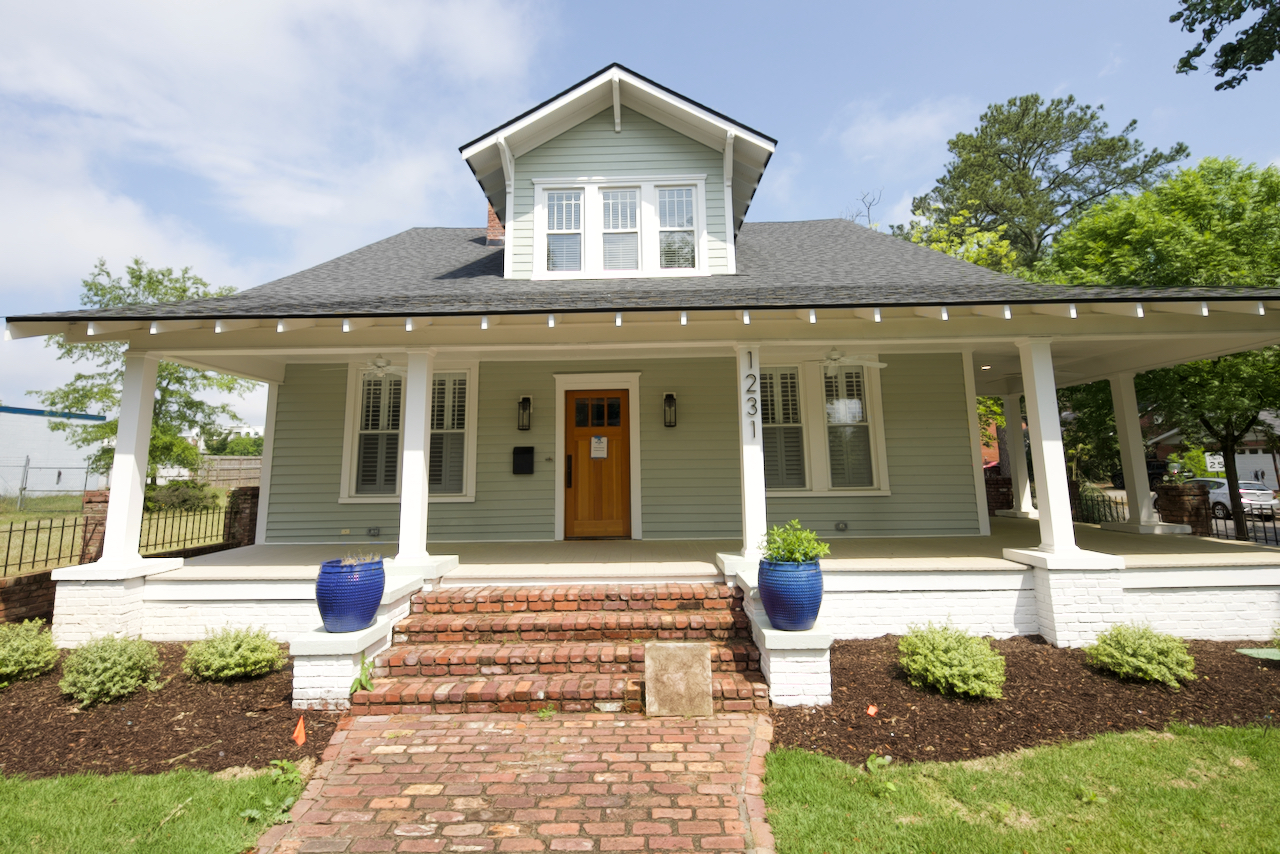
That doesn’t mean copying a century-old house. It means paying attention to scale, proportions, rooflines, materials, window placement, and other architectural details that help the home feel like it belongs. A well-designed home can look appropriate for the neighborhood on the exterior, while having an open floor plan and modern finishes on the interior.
Does Building in a Historic District Take Longer?
Yes. The additional time rarely comes from construction. It comes from everything that happens before construction begins.
Projects in Columbia’s historic districts are reviewed by the City’s Design/Development Review Commission (D/DRC) before a building permit is issued. Preparing that application takes time because it’s far more detailed than a typical permit submission. Site plans, elevations, exterior materials, setbacks, window layouts, mechanical equipment, and other design details all need to be thoughtfully coordinated.
The review schedule also matters. The commission meets once each month, so preparation and timing are important.
That’s why we don’t view the application as the beginning of the process. We see it as the culmination of work that’s already been done.
Experience Makes the Difference Before Plans Are Submitted
One of the biggest advantages of experience isn’t knowing how to respond when questions come up. It’s knowing which questions are likely to be asked before they ever become issues.
Our team spends a great deal of time working through design details before an application reaches the Design/Development Review Commission. We regularly communicate with city staff throughout the design process, refining plans and addressing potential concerns early rather than waiting until a public review meeting.
That preparation doesn’t eliminate every revision, but it often prevents avoidable delays and redesigns that can cost both time and money. For homeowners building in a historic district in Columbia, SC, that experience can have a meaningful impact on both schedule and budget.
Is It More Expensive to Build in a Historic District?
One of the most common questions we hear is whether building in a historic district costs more.
Usually, but not as much as many people expect.
Historic districts often require higher-quality exterior materials than you might use elsewhere. Depending on the neighborhood, that could mean fiber cement siding instead of vinyl or aluminum clad windows instead of entry-level vinyl windows.
Those requirements can increase the cost of a project, but they also contribute to the quality and longevity of the home.
In our experience, the bigger financial risk isn’t the material requirements. It’s making expensive changes later because important decisions weren’t made early enough. That’s why we place so much emphasis on thoughtful planning during design.
What Can You Change in a Historic District?
The city’s focus is almost entirely on what can be seen from the street.
Exterior materials, architectural details, setbacks, rooflines, windows, fences, driveways, and similar features all contribute to the character of a neighborhood and are subject to review.
Inside the home, you have almost complete flexibility. Open kitchens, large living spaces, home offices, and layouts designed for modern families are all possible. The challenge is creating a home that functions the way you want while presenting an exterior that complements the neighborhood around it.
Why Builder Experience Matters
Building in a historic district asks more of everyone involved. It asks more of the design team, more of the planning process, and more of the custom home builder leading the project.
At Wilson Co., we’ve designed and built homes in historic districts throughout Columbia for years. As a historic district builder in Columbia, SC, we’ve prepared countless D/DRC applications and work with city staff on a regular basis. That experience gives us a practical understanding of the process, the expectations, and the challenges that can arise along the way.
We can’t promise that building in a historic district will be as simple as building somewhere else, because it isn’t.
What we can promise is that experience matters. When your builder understands the process, anticipates challenges early, and plans carefully from the beginning, you’re far more likely to save time, avoid unnecessary costs, and move through your historic district home build with confidence.
Historic neighborhoods deserve thoughtful homes. Homeowners deserve a builder who knows how to get them there.